
GMRS vs CB Radio: Which to Use and Why
GMRS vs CB radio compared on license, frequency, power, range, audio and antennas, and why off-roaders moved from CB to GMRS. Which one you should run.
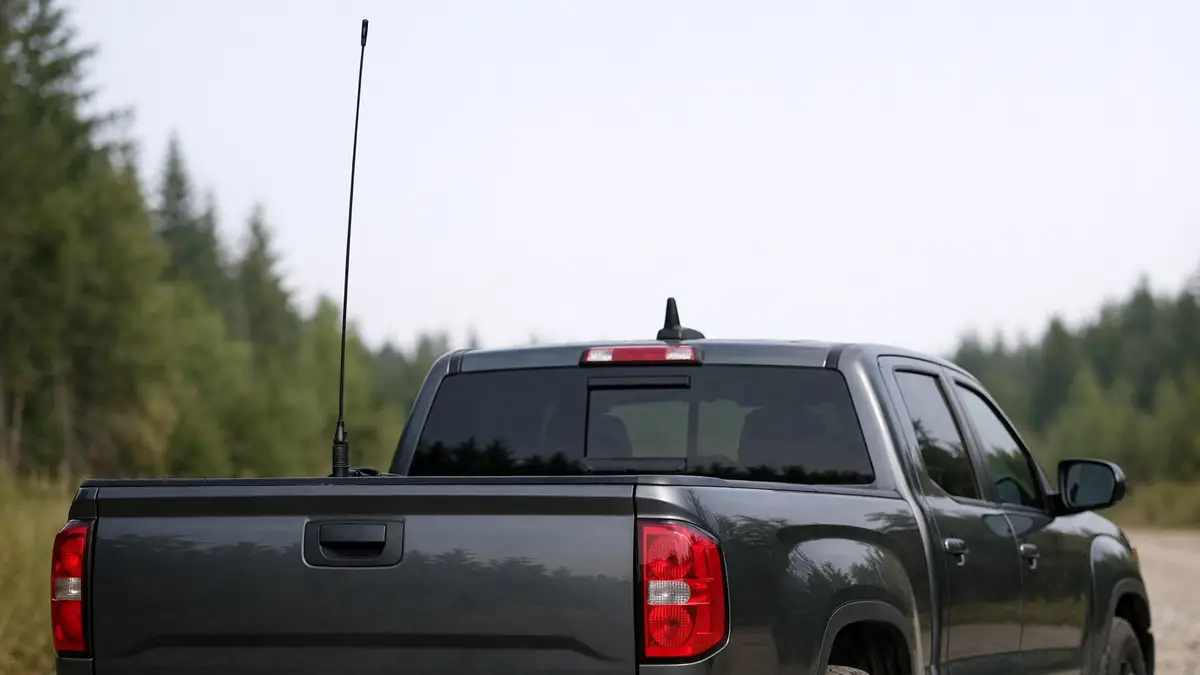
GMRS and CB are both personal radio services under 47 CFR Part 95, but they sit in different bands and solve the problem differently. CB (Citizens Band) is license-free, uses low-frequency HF channels and bulky antennas. GMRS (General Mobile Radio Service) needs a license but runs clearer UHF audio, more power and smaller antennas, and supports repeaters. For most modern users, GMRS is the stronger pick.
What is the difference between GMRS and CB radio?
CB is a license-free service on 40 channels near 27 MHz (HF), capped at 4 watts AM or 12 watts single sideband, governed by 47 CFR Part 95 Subpart D. GMRS is a licensed service on 30 UHF channels near 462 and 467 MHz, up to 50 watts, governed by Subpart E.
The band is the headline difference. CB’s 27 MHz signals need long antennas (a quarter wave is about 9 feet) and carry noisier AM audio. GMRS UHF needs short antennas, sounds clearer, and can use repeaters to extend range. Our GMRS radio guide covers the GMRS side in depth.
How do GMRS and CB compare, rule by rule?
The table sets the two services side by side on the points that matter for buying and using them.
| CB radio | GMRS | |
|---|---|---|
| License | None (dropped 1983) | $35 FCC license, 10 years, no exam |
| Band | 27 MHz (HF) | 462 and 467 MHz (UHF) |
| Channels | 40 | 30 |
| Power | 4 W AM, 12 W SSB | Up to 50 W on main channels |
| Antenna | Long (about 9 ft quarter wave) | Short UHF whip or roof antenna |
| Audio | AM, noisier | FM, clearer |
| Repeaters | No | Yes, 8 repeater pairs |
| Who it covers | Anyone | Licensee plus immediate family |
Which has better range, GMRS or CB?
On the ground, both reach only a few miles, so everyday range is similar. GMRS pulls ahead because it can use repeaters and better-mounted antennas; CB’s advantage is a rare one.
CB on single sideband can occasionally “skip” hundreds of miles when the ionosphere reflects 27 MHz signals, but that is unpredictable and not something to plan around. For reliable, repeatable range, GMRS with a mobile radio and roof antenna or a repeater beats CB. Check realistic distances for your terrain in the walkie-talkie range calculator.
Why did off-roaders switch from CB to GMRS?
The off-road community moved to GMRS because the gear is easier to live with and the audio is clearer in a convoy. GMRS antennas are short enough to mount on a roof or rack without snagging on trails, where a 4- to 9-foot CB whip is awkward. The UHF FM audio cuts engine and wind noise better than CB’s AM.
Add 50 W mobiles, repeater access and a $35 license that covers the whole family, and the practical case favored GMRS. The GMRS for overlanding guide covers convoy setup in detail.
When is CB still the better choice?
CB wins in a few specific cases:
- You want zero paperwork. CB needs no license at all; GMRS requires the $35 license to transmit.
- You talk to a CB-only group. Truckers and some established off-road clubs still run CB, and the two services cannot talk to each other.
- You already own CB gear and your range needs are modest.
If none of those apply, GMRS is usually the better long-term choice. Note that CB and GMRS use entirely different frequencies and cannot communicate; a radio is one service or the other.
How do CB and GMRS antennas differ?
Antenna size is the most visible difference. CB works at 27 MHz, where a full quarter-wave antenna is about 9 feet, so CB antennas are long whips, often 2 to 4 feet even as shortened, loaded designs that trade efficiency for size. GMRS works at 462 MHz, where a quarter wave is only about 6 inches, so antennas are short and easy to mount.
For a vehicle, the short GMRS antenna clears branches and garages that a tall CB whip catches. For a base station, both benefit from height, but the smaller GMRS antenna is simpler to raise. The GMRS antenna guide covers UHF antenna choices.
Can you run both CB and GMRS?
Yes, and some off-roaders do. They are separate radios on separate frequencies, so you install both and switch between them depending on who you need to reach: CB for a club or truckers that still use it, GMRS for family and newer groups.
Running both costs more space, money and antennas, and most people settle on one. If your group has standardized on a service, match it; if you are starting fresh, GMRS is the more capable base. The GMRS radio guide covers the GMRS side.
Why did the CB license requirement end?
The FCC dropped the CB license in 1983 because the service had grown so popular that licensing millions of casual users was impractical to administer. CB stayed license-free afterward, which is still its main appeal.
GMRS kept its license, which is tied to a call sign and family coverage. The $35 fee and 10-year term make it a light requirement compared with the exam ham radio demands. The GMRS license guide covers the process.
Which is better for an RV or truck?
For an RV or overland truck, GMRS is usually the better fit today: smaller antennas, clearer audio and repeater access for extending range on the road. CB remains common among over-the-road truckers, so if you want to hear highway chatter from big rigs, a CB still has a place.
Many RV and overland groups have moved to GMRS for in-group communication while keeping a CB only to monitor trucker traffic. See GMRS for overlanding for a convoy setup.
Do CB and GMRS radios ever come combined?
No. Because CB and GMRS use completely different frequency bands and modes (27 MHz AM versus 462 MHz FM), a single radio does not do both. Any multi-service radio you see combines services that share a band, such as FRS and GMRS, not CB and GMRS.
If you want both, you buy and mount two radios. This is another reason most users pick one service and commit to it. For the license-free family option that does share GMRS channels, see GMRS vs FRS.
Which should you choose?
Choose GMRS if you want clearer audio, smaller antennas, more power and the option of repeaters, and you do not mind a one-time $35 license that covers your family. Choose CB if you need a free, no-paperwork radio or you are joining a group that already runs CB.
For a family deciding between radio services generally, also compare the license-free option in GMRS vs FRS, then get set up with the GMRS license if you land on GMRS.
Frequently asked questions
Quick answers to what readers ask us most
Is GMRS better than CB radio?
For most users, yes. GMRS has clearer UHF audio, more power, smaller antennas and repeater support. CB's advantage is that it needs no license. If you want simple, free and no paperwork, CB still works; otherwise GMRS is the stronger choice.
Does CB radio need a license?
No. The FCC dropped the CB license requirement in 1983. Anyone may use a certified CB radio on its 40 channels. GMRS, by contrast, needs a $35 FCC license to transmit. See our GMRS license guide.
Which has longer range, CB or GMRS?
On the ground they are similar, a few miles at best. GMRS pulls ahead with repeaters and better antennas. CB on single sideband can occasionally skip hundreds of miles under rare conditions, but that is not reliable everyday range.
Why did off-roaders switch from CB to GMRS?
GMRS radios and antennas are smaller and easier to mount, the UHF audio is clearer in a convoy, and 50 W mobiles plus repeaters reach farther than CB in most terrain. The $35 family license made the switch easy.