
GMRS Base Station Setup: Antenna, Coax, and Power
How to set up a GMRS base station at home: radio, antenna height, low-loss coax, power supply and grounding, for real range from a fixed station.
A GMRS base station is simply a GMRS radio set up as the strong fixed station at your home or camp: a mobile or dedicated radio, a power supply, and a high outdoor antenna on good coax. Done right, it hears handhelds spread for miles around and can reach a distant repeater. The antenna and its height, not the wattage, decide how well it works.
What is a GMRS base station?
A GMRS base station is a fixed GMRS radio connected to an outdoor antenna and a power source at a home, cabin or camp. It is usually a 50 W mobile radio run on a 12 V power supply, or a radio sold as a base unit, feeding a gain antenna on a mast.
Its job is to be the strong station that can hear everyone: family handhelds in the neighborhood, hunters across a property, or vehicles on nearby roads. The GMRS radio guide explains where a base fits alongside handhelds and mobiles.
What do you need to build a GMRS base station?
The parts list is short, and each piece has a clear role. Skipping the antenna and coax to save money is the most common mistake.
| Part | Role | Notes |
|---|---|---|
| Radio | Transmit and receive | A 50 W GMRS mobile or a base radio |
| 12 V power supply | Powers a mobile radio at home | Size it above the radio’s peak current draw |
| Base or gain antenna | The real range driver | Mounted outdoors, as high as practical |
| Mast or mount | Raises the antenna | Roof, pole or push-up mast |
| Low-loss coax | Carries signal with least loss | LMR-400 for longer runs |
| Grounding and surge arrestor | Safety | Ground the mast and protect against lightning |
See the best GMRS mobile and base radios page for radio picks and the GMRS antenna guide for antenna types and gain.
How high should the antenna be?
As high as you safely can, because antenna height extends line of sight more than any other change. A gain antenna 20 to 30 feet up, above the roofline and clear of large metal, will outperform the same radio running more watts into a low antenna.
Keep the antenna away from gutters, HVAC units and other metal that distorts its pattern. For a home station, getting the antenna above the roof is usually a bigger upgrade than buying a higher-power radio. Height is why a base station beats a handheld even at the same wattage.
Why does coax choice matter?
UHF signals lose significant power in thin or long coax, so the wrong cable can waste much of what the radio produces. Thin cable like RG-58 is fine only for short runs; for anything over about 25 feet, use low-loss coax such as LMR-400.
Keep the cable run as short as the install allows and use good connectors. After the install, check SWR before transmitting much, since a high SWR signals an antenna or cable problem that can reduce range or stress the radio. Our how to check SWR guide walks through the meter and the readings.
How do you power and ground a base station?
Power a mobile radio at home with a regulated 12 V DC supply rated above the radio’s peak transmit current; a 50 W GMRS radio can draw well over 10 amps on transmit, so size the supply with headroom. A base-specific radio may run on mains power directly.
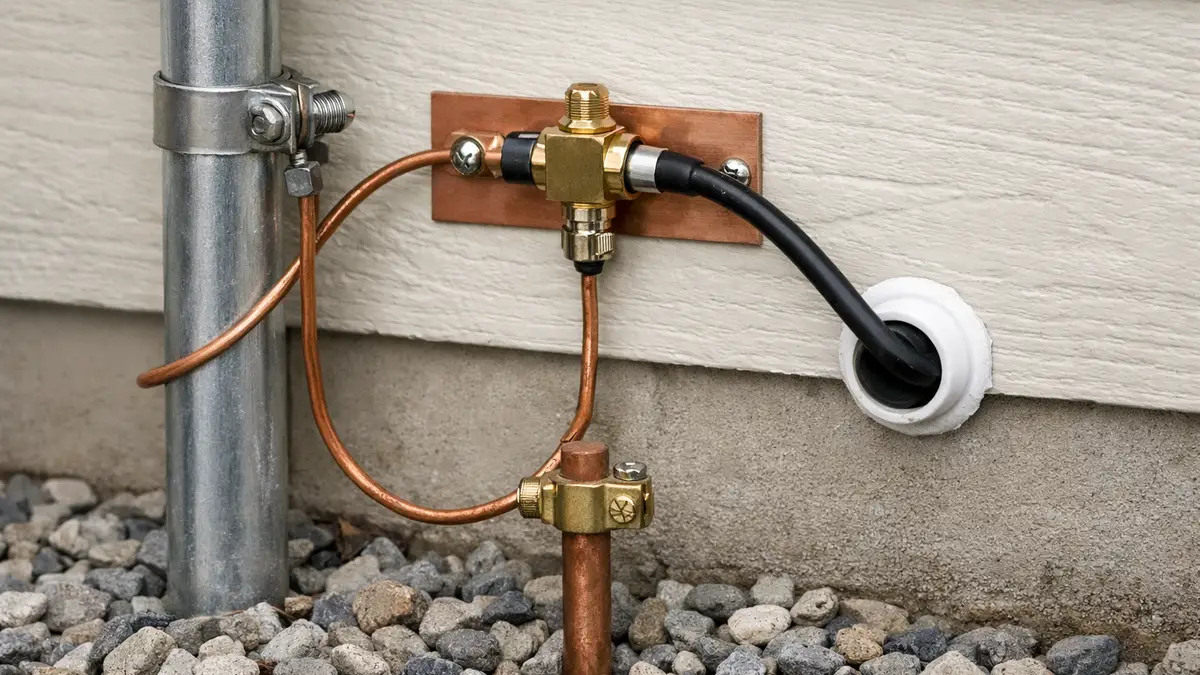
Ground the mast and add a coax surge arrestor where the cable enters the building, both for lightning safety and to reduce noise. Follow local electrical codes for the ground connection. Grounding is the step beginners skip and should not.
Can a base station reach a repeater?
Yes, and a base is well suited to it because the high antenna gives a clear path to a repeater on a hill or tower. Program the repeater channel with a plus 5 MHz offset and the owner’s transmit tone, the same as any GMRS radio.
A home base feeding a repeater is often the longest-range setup a family can run without an exam, since both your antenna and the repeater’s are up high. The GMRS repeater guide covers finding one and getting access.
How much does a GMRS base station cost?
A home base station runs roughly $250 to $700 beyond the $35 license, depending mostly on the antenna and mast.
| Item | Example | Typical price |
|---|---|---|
| FCC license | 10 years, whole family | $35 |
| 50 W radio | GMRS mobile used as base | $200 to $440 |
| 12 V power supply | 25 to 30 A regulated | $60 to $120 |
| Base antenna | UHF gain antenna | $50 to $150 |
| Mast or push-up pole | 20 to 30 ft | $50 to $150 |
| Low-loss coax and connectors | LMR-400 run | $40 to $120 |
Prices are representative US figures as of October 2026. The antenna, mast and coax matter more to performance than spending extra on the radio. There is no monthly fee on GMRS.
Indoor or outdoor antenna: which should you use?
Use an outdoor antenna whenever you can. An antenna in an attic or indoors loses signal to the roof, walls and wiring, and sits lower than a roof mount, so range suffers badly. An outdoor antenna above the roofline is the single biggest factor in how well a base station works.
An indoor or window antenna is a last resort for renters who cannot mount outside, and it will reach far less. If outdoor mounting is impossible, keep the antenna as high and as near a window as you can, and keep expectations low.
What mistakes do first-time base builders make?
The common errors all come back to the antenna system, not the radio:
- Cheap thin coax on a long run, which wastes power before it reaches the antenna.
- Mounting the antenna too low or beside large metal, which flattens the pattern.
- Skipping grounding and a surge arrestor, which risks equipment and safety.
- Not checking SWR, missing a fault that cuts range; see how to check SWR.
- Buying a bigger radio instead of a better antenna, which rarely helps.
Fixing these costs less than upgrading the radio and does far more for range.
Who should and should not build a GMRS base?
A base station makes sense if you have a fixed location that needs to hear or reach radios spread over an area: a home with family on GMRS nearby, a property, a camp, or a spot in reach of a repeater. It is overkill for a couple who only use handhelds on occasional trips.
Before you build, get the GMRS license, which covers a base station and your family under the same $35 fee. Then pick the radio from the mobile and base radios page and plan the antenna with the antenna guide.
Frequently asked questions
Quick answers to what readers ask us most
Can you use a GMRS mobile radio as a base station?
Yes. A GMRS mobile radio runs fine at home on a 12 V power supply feeding a base or outdoor antenna. Many people use a 50 W mobile like the Midland MXT575 as a base. See our best GMRS mobile and base radios page.
How high should a GMRS base antenna be?
As high as practical, since height drives range more than power. A gain antenna on a 20 to 30 foot mast above the roofline is a strong home setup. Keep the antenna clear of large metal objects and use low-loss coax to limit cable loss.
What coax should I use for a GMRS base station?
Use low-loss coax such as LMR-400 for runs over about 25 feet, because UHF signals lose a lot in thin cable like RG-58. Keep the run as short as practical and use quality connectors, then check SWR before transmitting much.
Do I need a license for a GMRS base station?
Yes, to transmit. The same $35 GMRS license that covers handhelds covers a base station and your family. There is no separate base station license. Fixed stations follow the same 47 CFR Part 95 Subpart E rules.